2tone 5寸丸皿φ150
Couldn't load pickup availability
— 益子の伝統釉薬を使用したシンプルなリム皿 —
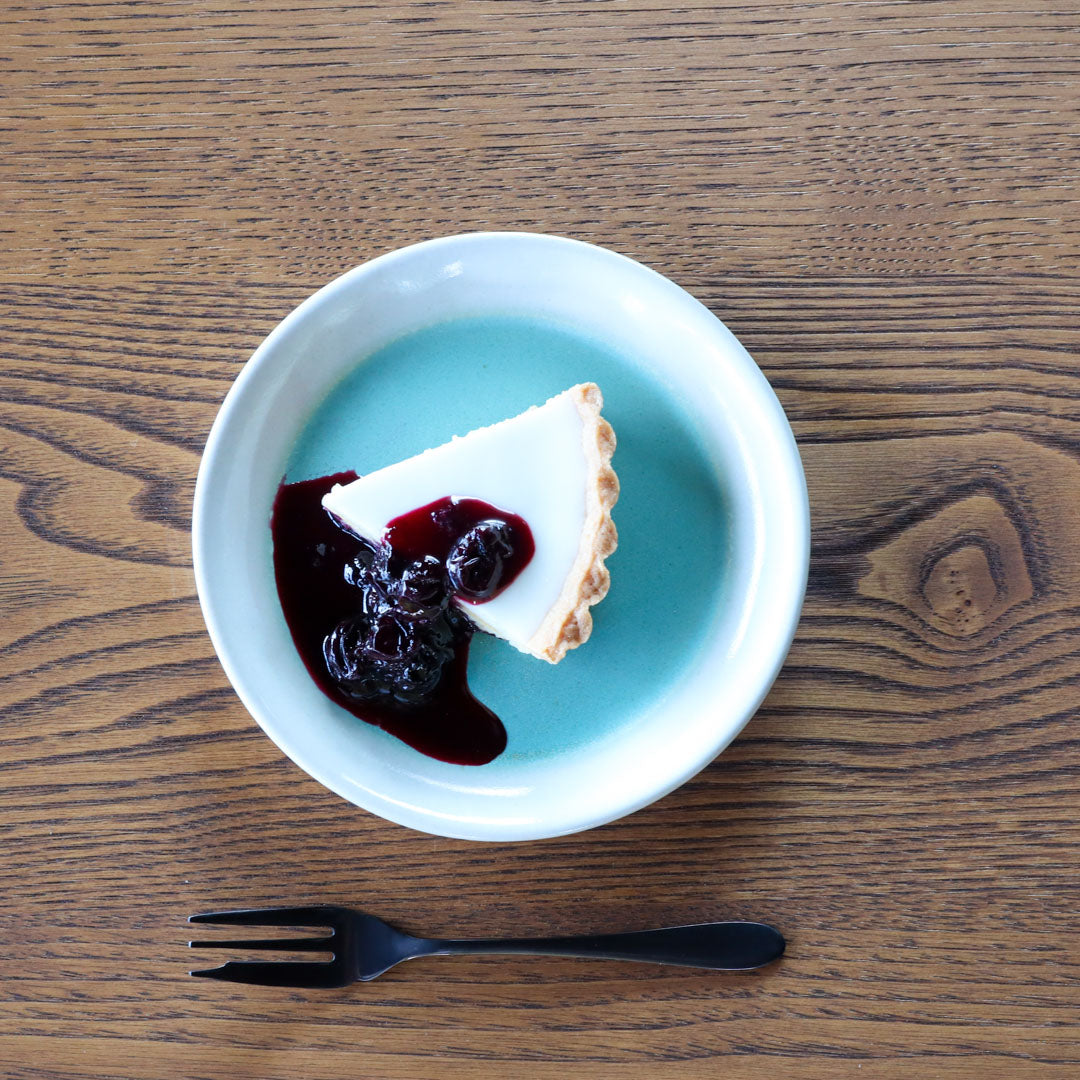
益子焼らしい素朴なぽってりとした表情を持たせながら、現代の食卓に馴染む丸皿を目指しました。リムによって余白ができることから、料理を盛り付けた際に存在感のある一品になります。
また、少し角度を付けたリムは持ちやすく、料理がこぼれにくい形状です。
—サイズ違いや色違いで揃えても—
同じデザインで4〜8寸の5サイズを展開しています。
5寸皿は小さめの取り皿やデザート皿に適したサイズです。
■サイズ:約φ15cm×2.2cm
【サイズは目安です】
道祖土和田窯の器はすべて手作りで制作されています。全て規格通りに制作しておりますが、素材や制作環境によってサイズ、釉薬の表情に個体差が発生する可能性がございます。
[Please check before purchasing]
[Please check before purchasing]
Characteristics of tableware and inspection standards
All ceramics sold in our shop are inspected upon arrival, but because they are handmade, each piece is unique. The following characteristics are considered to be characteristics of the product and are considered to be of good quality, so you can enjoy it.
Crazing: A fine crack pattern that appears on the surface of the glaze; it is not a crack but part of the vessel's character.
Pinholes: Small holes that remain during firing. Products that do not affect use are considered to be good quality.
Iron powder: Iron contained in the soil appears as black dots. It is used as part of the expression.
Glaze unevenness: The shades of glaze created by handwork have long been appreciated as a beautiful feature.
Faded or blurred painting: This is a natural difference in appearance due to firing conditions, etc.
Molding distortion: This is the unique shape created by using a potter's wheel or by hand.
Rattling of the base: If there is any significant wobble, the product will be considered defective, but if there is any minor wobble, the product will be considered as good.
Cracks and chips: Items with strength issues are considered defective, but if the expression is acceptable, they will be treated as good products.
Regarding handling of the equipment
Changes with use: Ceramics are absorbent and may develop crazing. Soaking them in hot water before use will help prevent stains and tea stains.
Dishwasher: Porcelain can often be washed in a dishwasher, but hand washing is recommended for ceramics as they may deteriorate.
Microwave ovens: Most items can be used in a microwave oven, but we do not recommend using them in order to avoid damage. Items with gold leaf cannot be used in a microwave oven.
Oven: Please refrain from using anything other than those labeled as heat-resistant.
For more details, please click here.
About the characteristics of pottery
Shipping
Shipping
◆Hokkaido
¥770
◆ Tohoku (Aomori, Iwate, Akita, Miyagi, Yamagata, Fukushima)
¥605
◆ Kanto (Ibaraki, Tochigi, Gunma, Saitama, Chiba, Tokyo, Kanagawa)
¥495
◆Koshinetsu (Yamanashi, Nagano, Niigata)
¥495
◆Hokuriku (Toyama, Ishikawa, Fukui)
¥495
◆Tokai (Gifu, Shizuoka, Aichi, Mie)
¥495
◆Kansai (Shiga, Kyoto, Osaka, Hyogo, Nara, Wakayama)
¥495
◆Chugoku (Tottori Prefecture, Shimane Prefecture, Okayama Prefecture, Hiroshima Prefecture, Yamaguchi Prefecture, Tokushima Prefecture, Kagawa Prefecture, Ehime Prefecture, Kochi Prefecture)
¥605
◆Shikoku (Tokushima Prefecture, Kagawa Prefecture, Ehime Prefecture, Kochi Prefecture)
¥660
◆Kyushu (Fukuoka Prefecture, Saga Prefecture, Nagasaki Prefecture, Kumamoto Prefecture, Oita Prefecture, Miyazaki Prefecture, Kagoshima Prefecture)
¥715
◆Okinawa Prefecture
¥770
◆Remote Islands
¥1,144

Inquire about this work
- Free shipping for purchases totaling 11,000 yen (tax included) or more
Share

Regarding inventory of works
As the name suggests, TOKO ONLINE GALLERY is a gallery where you can view the works of each artist. For this reason, we also display sold-out works as a reference for their style. Depending on the work, there may be similar works that use the same glazes and techniques, so please feel free to contact the store even if the item is out of stock.
Depending on when you make your purchase, the item may be sold out in store. If this happens, we may suggest a different piece that is as similar as possible, as each piece has a different expression and we are unable to provide an identical piece. We ask for your understanding. (We apologize, but if we find that the item is sold out after payment, we will refund you.)
Browsing history